
Chime
Designing and launching an enterprise platform that powered every Chime operations team.
Enterprise platform
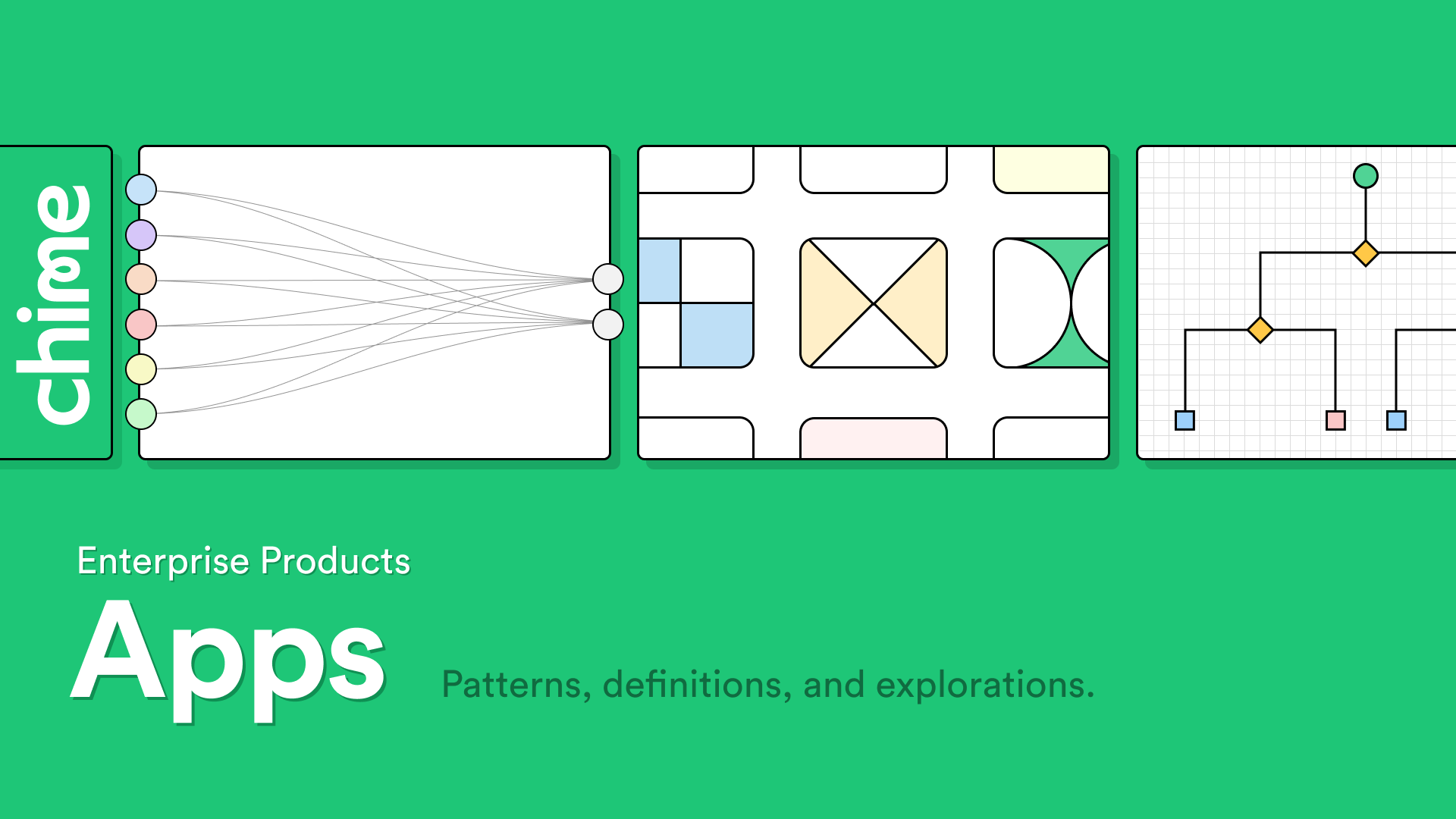
I was brought on to help architect and unify the Chime enterprise platform in order to help get the company to IPO readiness.
Understanding a fragmented operations ecosystem
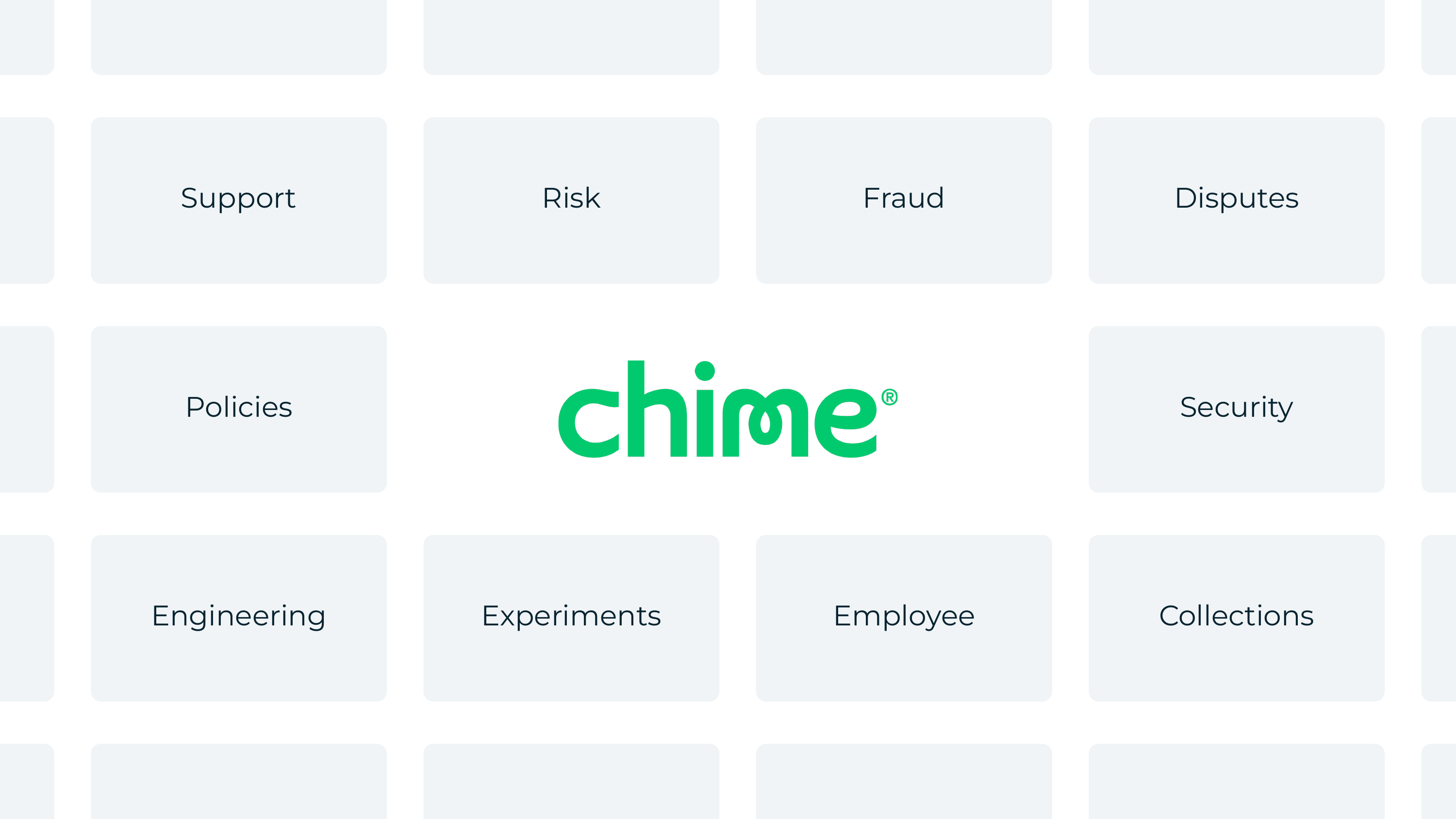
We started by mapping every Chime operations function and the bespoke tools they relied on. The exercise exposed redundant investments, inconsistent data flows, and an opportunity to centralize the member experience for agents and specialists alike.

Quantifying scope and sequencing
Partnering with product and operations leads, we catalogued the full backlog of tooling needs. RICE scoring, cost modeling, and vendor comparisons helped us determine which surfaces to build, buy, or retire as we stood up the new platform.

Aligning leadership on the platform bet
Visual models translated the tradeoffs between ad-hoc tooling, a service team, and a true platform. By framing the impact on experience, maintainability, and time to delivery, we secured funding for the long-term investment Chime needed.

Designing a shared data foundation
The new platform hinged on a canonical schema. Design paired with architecture to document data relationships, third-party dependencies, and lineage so engineers and analysts could build safely on consistent definitions.

Shipping EnterpriseKit to unify internal UX
We built EnterpriseKit—a component library with accessibility baked in—to keep dozens of product teams shipping consistent interfaces. Six teams adopted it in the first release, with thousands of installs powering all internal tools by the end of the year.

Launching Penny for operations
Penny became the flagship application for member support. We streamlined navigation, surfaced the right context per role, and rolled it out to more than five thousand agents who now rely on it for daily operations.

Embedding intelligence in dispute resolution
For the disputes team, we layered machine learning risk indicators and investigative timelines into the workflow. Investigators could triage cases faster, compare signals, and document outcomes without bouncing between tools.

Supporting new product lines
As Chime expanded into lending, we extended Penny with domain-specific servicing tools. Agents could assess payoff progress, answer regulatory questions, and take quick actions with confidence during the pilot program.

Operationalizing experimentation
MXP turned experimentation into a self-serve capability. From cohort creation to metric selection, the platform let teams move quickly while honoring governance requirements across Chime’s internal users.

Closing the loop with case management
Our final milestone paired Penny with Zendesk to orchestrate complex case queues. By threading agent actions, ticket states, and core account data together, we delivered a unified experience for the pilots that handled Chime’s most sensitive workflows.